
Tuk-tuks rule the road in Southeast Asia. Forget being transported in the lap of luxury or even a normal car for that matter, tuk-tuks are typically a motorized rickshaw. Not always the safest way to get around, but sometimes (mostly) the only option other than walking. Tuk-tuks were in almost every country visited in Asia and they vary greatly by region.
Thailand: These guys are the kings of ‘kick-backs.’ You are looking for a ride to the local temple? Be prepared to make 3-4 stops along the way. Jewelry store, tailor shop, tourist agency, random temple under construction that charges $3 to get inside. . . . It can all be a bit of scam if you’re not careful. By the end of our time in Thailand, Julia and I would set a price with the driver and then say “No stops.” The driver would say “No stops?” And we would respond “Only here (pointing to our destination on the map.) No stops.” Then we were off.

Cambodia: Nicest tuk-tuk drivers. We really didn’t use many tuk-tuks while in Cambodia, but the couple we rode were so nice. The tuk-tuk themselves were the most comfortable too. Cushioned seats, cold water in an ice chest under the seat (for the longer tours around the temple ruins) and individual names emblazoned on the sides.
These guys have the tours around Siem Reap down to a science. Drop the tourists off at the temples, then hang out for a couple of hours with each other. Some even have hammocks hung inside the tuk-tuk to catch up on beauty sleep after delivering the tourists to the obligatory sunrise at Angkor Wat. Our guy in Siem Reap was Mr. Nang. He was a true gem. He spent the day driving us around to different ruins, telling us where to go, and offering us cold water when the Cambodian sun was beating down.
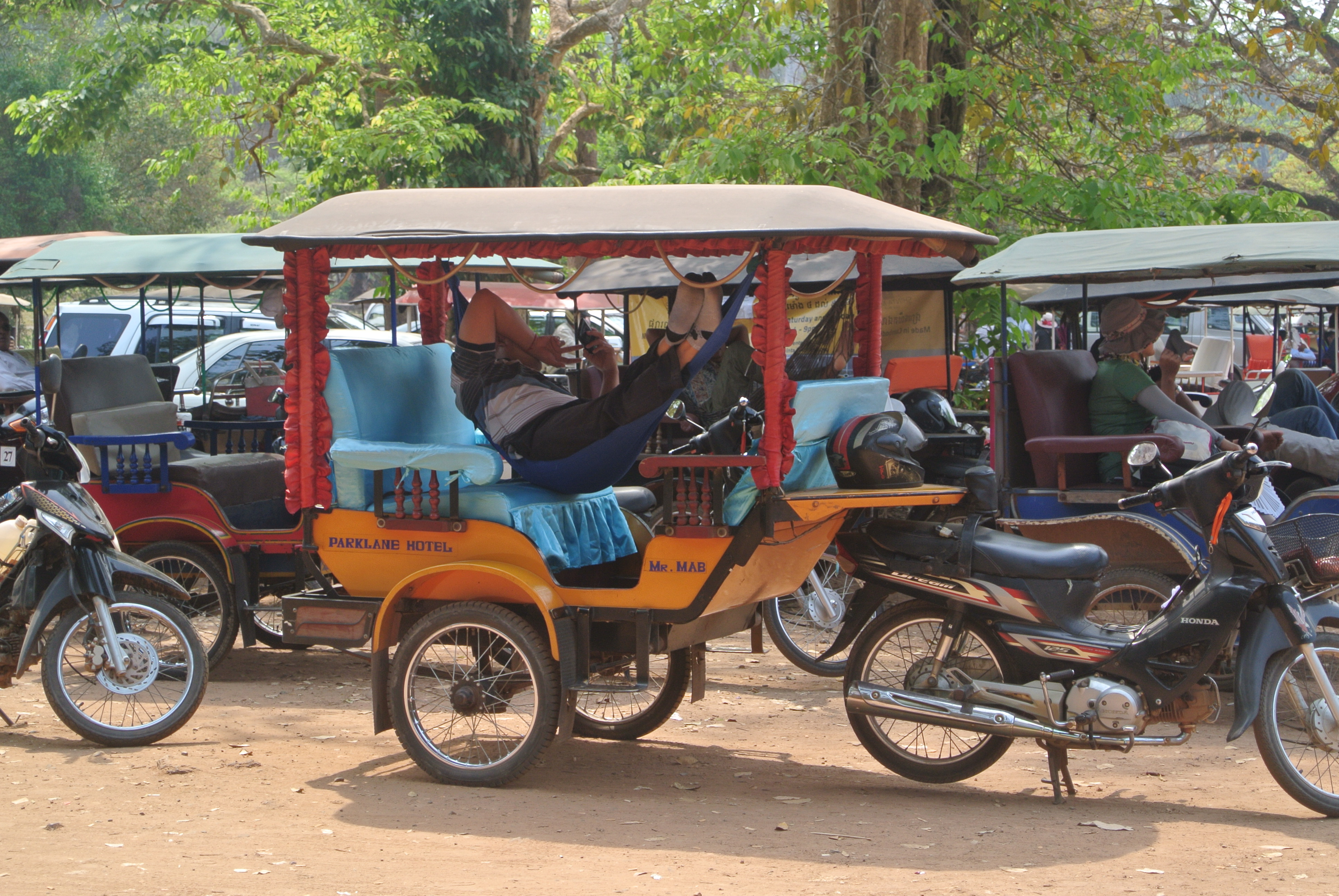
Siem Reap is a very walkable city and that is what we did on most days. Although we didn’t use the tuk-tuks, we were constantly offered them. When walking along the street it’s all you hear. You have to give these guys credit (and yes it is mostly men) because they are really trying to hook you in. “Tuk-tuk lady? Where you go?” We would smile and say ‘no thank you,” and then it would be “How about tomorrow? What you planning for tomorrow? Need tuk-tuk.” One after another “Tuk-tuk lady?” “Tuk-tuk ride?” “How ’bout tuk-tuk?” The best was when they would beep and wave at us from across the street and yell “tuk-tuk lady?” One night we were walking home and the usual chorus of “tuk-tuk? tuk-tuk? tuk-tuk?” rang in our ears. We were almost to our hotel when one guy leaned my way “Lady, you want tuk-tuk? Marijuana? Cocaine?” Yikes. I picked up the walking pace.
Vietnam: We didn’t ride in many tuk-tuks while in Vietnam. These carts were typically non-mororized. The men pushed the carts on bikes. To Julia and I this just felt like a bit much.

China: The tuk-tuks in China we didn’t even ride. We had heard horror stories before getting to China about the safety (or lack thereof) of these things. First of all, they are basically steel death traps and I’m not convinced two full-grown tall-ish American women could fit inside. Second, many people told us that even if a price is negotiated before the ride, it is often reneged half way through. Something along the lines of agreeing to 30RMB (around $5 before the trip starts) and when you arrive near the destination the price is changed to 300RMB. Sure you can refuse to pay but things can often get dicey and dangerous quickly. Julia and I decided to leave it to our very own reliable tuk-tuk service, our good old fashion strong legs and feet.

The last tuk-tuks I saw were in Japan. These rickshaw contraptions seemed to be more for show than actual use. I saw them mostly in towns that catered to tourists look for traditional Japanese culture. They were push by sheer body might. I had to give it to these guys and girls. They would haul people around by first walking and then picking up speed to a run. It was very impressive. Again, I didn’t partake because I never needed to. I preferred to wave and take pictures of them.

 The Weather From Here