
The next morning we woke up and went for a quick walk along the coast. Back at the hotel we asked Siyad if he would call us a taxi to go to the train station. “Oh no need. Just walk outside and you can flag one.” We asked him if we should go up the hill or down from where our hotel was located. “It doesn’t matter. Either is fine.” Bridget and I decided to go up the hill. We proceed to walk to an “intersection” of sorts. A better way to think of it would be to imagine the game Frogger and now picture cars coming toward you in every direction while standing in the middle. Siyad was correct. There were taxis. But every one was filled and/or weren’t stopping for us. We had about 1 hour before our train left. After wasting a good 15-20 minutes trying to win the game of Frogger and flag an available taxi we gave up and returned to the hotel. Siyad: “Girls, you are back!” We asked him if he could please call a taxi because we are running out of time and we couldn’t seem to find one. “Yes I can do this for you but instead of 30 dirham the price will be more like 60.” That is $3.50 compared to $6.50. Ahh sweet, sweet Siyad. Thank you so much for helping us adhere to our budget but please CALL US A CAB! Siyad called the taxi and we waited. We were down to 30 minutes. Siyad brought us two plastic chairs to sit in on the front patio. 25 minutes. I worriedly paced around the sidewalk still trying to flag a taxi from on street. Suddenly a calmness came over me. It is what it is. If we miss our train, we miss our train. We’ll take the next one. I didn’t let the thought enter my brain that the “next one” was 6 hours later. Whatever we will figure it out. 20 minutes. Finally the taxi arrived with 15 minutes to spare. Siyad told us “5 minutes to the station. 7 minutes at the most.” The taxi raced to the station, we jumped out, sprinted (Home Alone style) to the ticket office, bought tickets and then dashed onboard. It could not have been any closer.
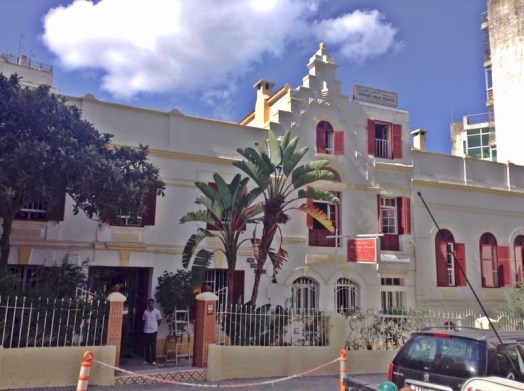
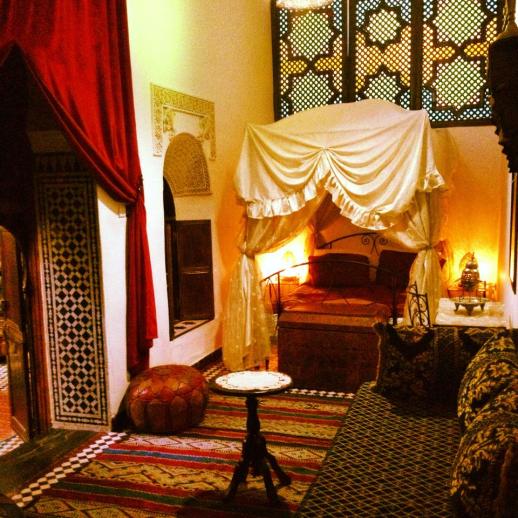
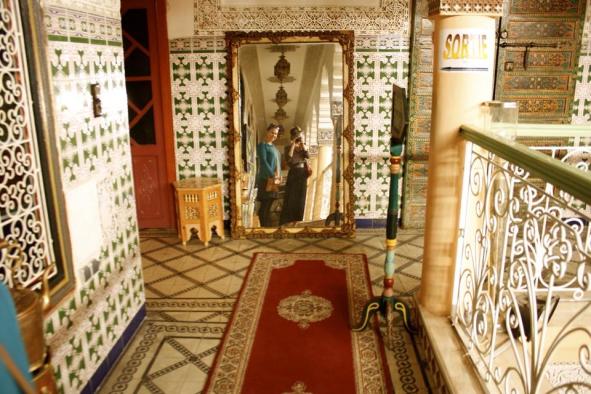
We arrived to Fes and an employee from our hotel was waiting outside of the medina gates for us. The medina is a walled section on the city where the streets are very narrow and crowded. It is densely populated and inaccessible to automobiles. That night we were staying inside the medina walls at a traditional riad. A riad is a Moroccan home with 5-8 rooms centered around a courtyard, garden or small pool. In order to get to the riad we put our luggage in a rickshaw/wheelbarrow contraption and followed our host through the streets of the medina. When we got to our riad we were given customary mint tea and asked to sit in the courtyard while our room was being prepared. Upon entering the room we were delighted to see a canopy bed (B kindly gave it to me because “you’ll be traveling for a year so you should be comfortable!” What a sweetie!) a day bed, and a beautiful tiled bathroom. All of this for the budget price of about $25 a person. Welcome to Africa, my friends!
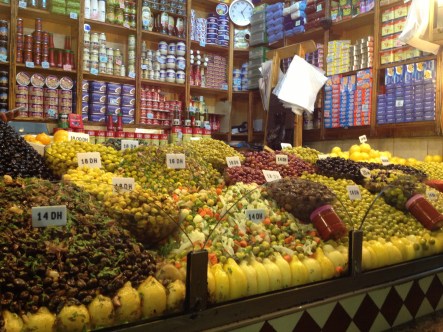
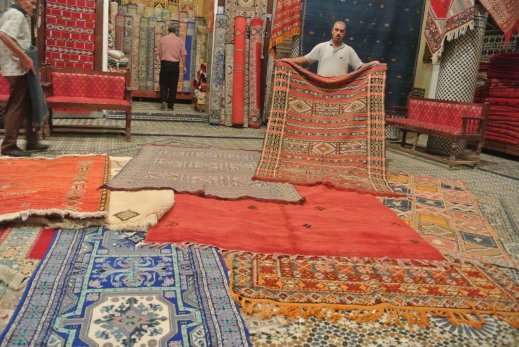
Hassan took us through the medina showing us private homes, riads and souks (the marketplace). We saw booths filled with spices, clothing, carpets, food, jewelry, soaps, perfumes etc. It was overwhelming to the senses! At one point we were taken into a shop that sold all types of leather goods. Before shopping we went to the roof of the building and looked down into the leather tannery. The place truly smelled awful. It was really amazing to me that the men were able to work in these pits of dye.

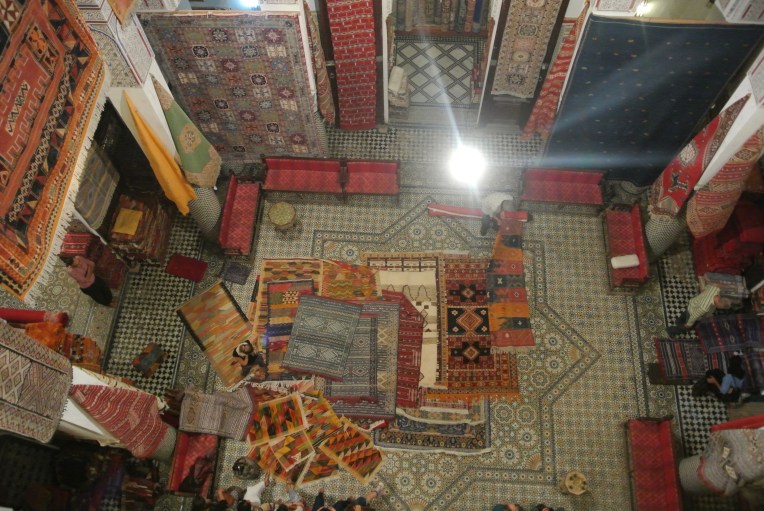
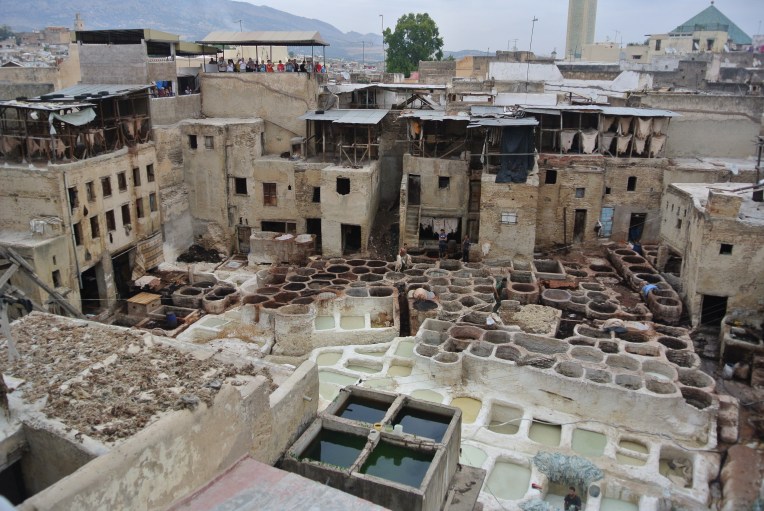
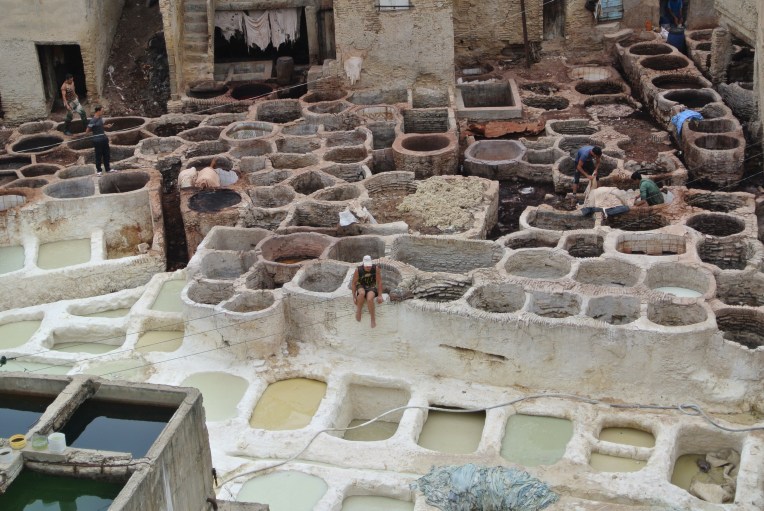
After walking around and shopping Hassan dropped us off at a local restaurant. He more or less decided for us that we would eat here while he went to pray. We didn’t mind because the food was delicious. Speaking of prayer, we would hear the “call to prayer” 5 times a day belting out from a loudspeaker atop the mosques. Hassan told us the times for prayer were typically 6am, midday (around 11), middle of the afternoon about 3, just after sunset close to 7 and two hours after sunset about 9. When I first arrived I noticed the call every time it sounded, but then, like anything else, I hardly heard it after a couple days.

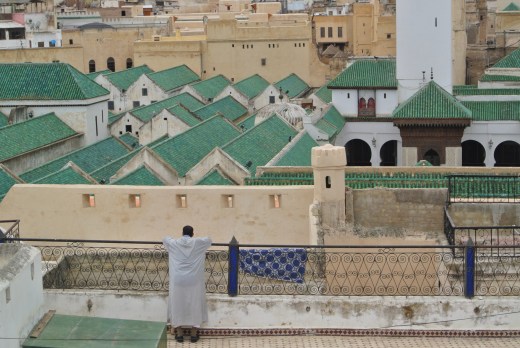
Back to all the questions we asked Hassan! Of course, we first had to understand the language spoken in the country. Being a speech language pathologist and writer respectively, this was important to us! Morocco has two official languages: Standard Arabic and Berber. Moroccan Arabic (known as Darija) is the dialect. French is the country’s unofficial third language. For this reason, Hassan would often to refer to us as “madame” or “madams.” Being the polite Americans that we are, we would often start with “Hassan, may I ask you a question?” and Hassan’s response would be “Please, madame ask me anything. Anything you want I can answer.” Perfect. Of course, we were respectful in our line of questions but we certainly asked away. “Hassan why do some men wear the long cloaks and other men don’t?” Madams, men wear these hijabs on different days of the week. Today I wear this hijab, tomorrow you may see me not wearing it. Usually on Fridays I wear the hijabs because it is our holy day. Our tour was on a Friday. We also asked why some women wear full burkas with only their eyes showing and others were in just a headscarf. Hassan told us this was based on their level of religious conservatism. He also told us his wife wears only a head scarf and typically women start to wear these when they get married. Because madams I need to see a woman’s beauty before I marry her. This made sense! Naturally it is important to see your future spouse’s beauty before you marry him or her! He told us clothing is only an outward expression of their religion and it doesn’t necessarily prevent or encourage a way of acting. I noted “It’s about a person’s heart not his/her clothing.” Yes madam. Thank you. Exactly. I told him he could use that line in future tours but to be sure to credit it to me.

The last thing that we really talked about while walking through the streets (Hassan refers to his job as a “walkie talkie” job for obvious reasons,) was religious practices. He told us about how children are baptized, the rituals of his religion, the five pillars of Islam (declaring one god, praying 5 times per day, giving to the poor, fasting during Ramadan, making a pilgrimage,) and important figures (“Her name is Fatima and she is the most important female in Islam. She is like your Mary.”) Throughout the whole tour I was struck at how Islam paralleled other religions. He would tell us a story or practice and we were usually able to link the idea to something from another religion. It was a very fascinating and interesting tour to experience. Currently there is much controversy in the news with the Islamic religion and this is too big a topic to try to tackle here. However, seeing this kind, respectful, devout man talk about his religion in a caring and peaceful way really opened my eyes and made me think about all the complexities that go in to our “religions.”
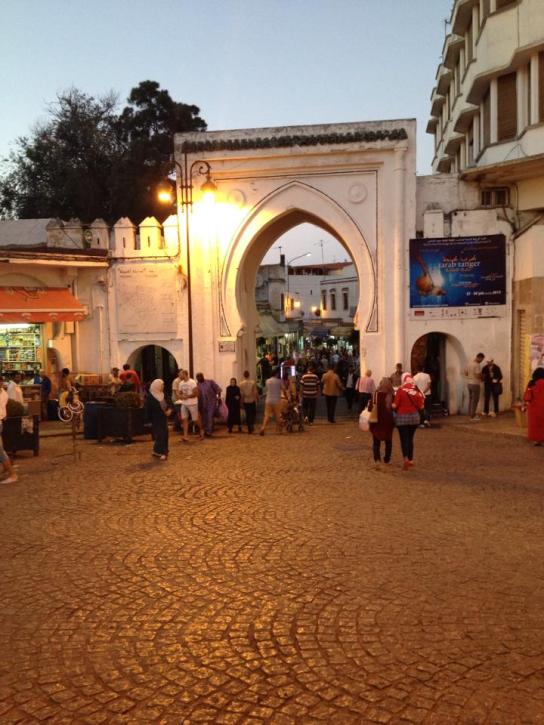
At the end of the tour, Hassan showed us the way back to the riad. I can say with utmost certainty, we would have NEVER found our way back. As he was leaving Hassan thank us for being interested and inquisitive. He said he learned things from us during our time together. He wished us a long life and for Bridget and I to remain lifelong friends.

 The Weather From Here